

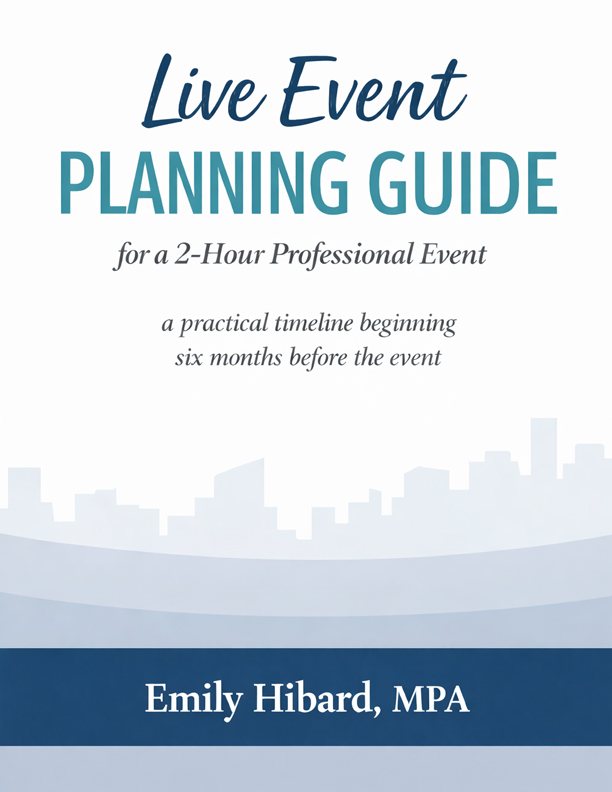
Live Event Planning Guide for a Two Hour Professional Event – eBook by Emily Hibard, MPA
$24.99
This 35-page eBook will help you prepare for a two hour professional event, starting six months before the event.
This book guides you through what to do before and after the event, and also explains the importance of understanding the emotional aspect of live events.
Sample emails to speakers and attendees are included.
Description
Description
Live Event Planning Guide for a Two Hour Professional Event – Chapter 1 Preview:
6 Months Before the Event
Event Strategy & Planning
Strong events begin with a clear strategy. Before booking venues or selling tickets, it is important to define the purpose of the event and the audience you want to reach.
Events that align with a clear objective—whether fundraising, education, or networking—are much easier to market and execute successfully.
How to Define the Core Details of an Event
Before an event can be planned, promoted, or executed successfully, organizers must first define several foundational elements that shape the entire experience. These early decisions influence everything that follows, including marketing, ticket pricing, venue selection, and the overall tone of the program. Thoughtful event planning also requires understanding the emotional experience of attendees.
People do not attend events solely for information—they attend for connection, inspiration, recognition, and shared experiences.
When these emotional elements are considered early in the planning process, events become far more meaningful and memorable.
Event Purpose
Every successful event begins with a clearly defined purpose. Ask yourself what the event is meant to accomplish and why it matters. Is the goal to educate, celebrate, inspire, raise funds, or bring a community together? The purpose should be simple enough to explain in one sentence and meaningful enough that attendees feel their time is well spent.
Emotionally, the purpose should resonate with attendees by offering something they value—whether that is learning something new, feeling inspired, building relationships, or supporting a cause they care about.
Target Audience
Understanding who the event is designed for is one of the most important planning decisions. The audience influences the program style, venue selection, marketing approach, and pricing strategy. Consider the professional background, interests, cultures, religion, and motivations of the people you want to attend.
Equally important is understanding what emotional experience they may be seeking. Some audiences attend events to network and build relationships, while others come to learn, feel inspired, or connect with a community that shares their interests or values.
Ticket Pricing Strategy
Ticket pricing should reflect both the value of the event and the expectations of the target audience. Pricing communicates more than just cost—it signals the perceived quality and importance of the event.
A low price may make the event accessible but can sometimes reduce perceived value. A higher price can signal professionalism and exclusivity but may limit attendance.
The goal is to find a balance where attendees feel they are receiving meaningful value for their investment of both time and money.
Expected Attendance
Estimating attendance helps guide many logistical decisions, including venue size, staffing needs, catering, and technical setup. Start by considering the size of your email list, the strength of your network, and the likely interest in the topic. For first-time events, conservative estimates are often helpful.
Emotionally, the size of the audience can shape the atmosphere of the event. Smaller groups often create a more intimate and conversational environment, while larger groups generate energy, excitement, and a sense of momentum.
Key Outcomes
Finally, define what success looks like once the event is over. Key outcomes may include educating attendees, raising funds, generating new partnerships, expanding community awareness, or building relationships that lead to future opportunities. Clear outcomes help guide programming decisions and allow organizers to evaluate whether the event achieved its goals.
When done well, attendees should leave feeling that the event was worthwhile…energized by new ideas, new relationships, or a deeper connection to the mission behind the event.
When these foundational elements are thoughtfully considered, the event becomes more than a scheduled gathering. It becomes a shared experience that engages attendees intellectually, professionally, and emotionally.
Build an Event Budget
Estimate costs for:
- Venue rental
- Catering
- Photography
- Parking
- Video recording
- Printing
- Step-and-repeat backdrop
- Step-and-repeat stand and sandbags
- Audio/video equipment
- Lighting
- Marketing
- Ticket platform fees
- Internet (hardwired, wifi)
- Speaker fee(s)
- Travel
Delivery Info
- Standard and Express delivery services are available for all items.
- Shipping costs are calculated at the checkout page (after delivery option & destination confirmation).
- Tracking is available for all delivery options.
- Items are delivered during standard business hours.
Reviews (0)
You must be logged in to post a review.

Reviews
There are no reviews yet.